Calathea Care: How to Prevent Brown Leaf Tips
Published Date:
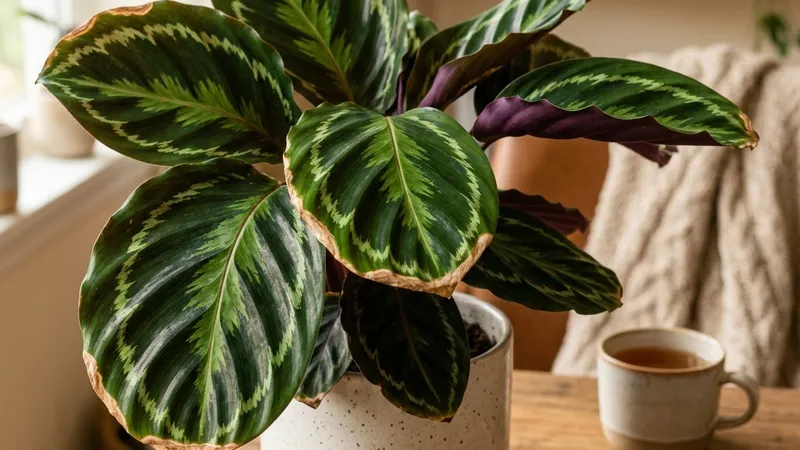
Calatheas, often referred to as “Prayer Plants” due to their habit of raising and lowering their leaves day and night, are famed for their strikingly beautiful, intensely patterned foliage. They look like living pieces of art. However, they are also notorious in the houseplant community for being absolute divas. The most common and frustrating issue plant parents face is the sudden appearance of crispy, brown leaf tips and margins that slowly spread inwards, ruining the plant’s aesthetic.
This browning is not a disease, but rather a sign of acute environmental distress. A Calathea’s leaves act like a direct barometer for your home’s air and water quality. If conditions are even slightly off, the plant will immediately protest. In this guide, we will break down exactly why these brown tips form, how you can fix the underlying environmental issues, and how to keep your Calathea’s foliage pristine and vibrant.
The Core Problem: Why Calatheas Burn So Easily
To understand why a Calathea is so sensitive, you must look at where it comes from. Calatheas are native to the tropical Americas, specifically the understory of the Amazon rainforest. In this natural habitat, they live on the jungle floor, shielded from direct sun by massive tree canopies. They experience incredibly high humidity (often 80-90% year-round) and are watered exclusively by pure, mineral-free rainwater.
When you bring a Calathea into a modern, climate-controlled apartment, it experiences massive culture shock. The air is dry, the light can be too harsh, and especially the water coming out of our taps is heavily processed. The brown, crispy edges are the physical manifestation of the plant’s inability to process these harsh indoor elements.
Step-by-Step Solution: Creating a Rainforest Microclimate
To stop the brown edges from spreading, you must replicate the Amazon understory as closely as possible. You cannot reverse the brown that is already there, but you can protect all future growth.
Step 1: Fix Your Water Quality (The #1 Culprit)
Calatheas are hyper-sensitive to the chemicals and minerals found in municipal tap water. Chlorine, chloramine, fluoride, and heavy mineral salts cannot be processed by the plant. As the plant absorbs water, it pushes these toxic minerals to the absolute furthest extremities of its vascular system: the very tips and edges of the leaves. There, the minerals accumulate, burn the cellular tissue, and turn the edges brown and crispy.
The Fix: You must stop using tap water immediately. Switch to using exclusively distilled water, reverse osmosis water, or collected rainwater. If you must use tap water, let it sit out in an open jug for 24 hours to allow the chlorine gas to evaporate (note: this does not remove fluoride or chloramine).
Step 2: Raise the Humidity
As tropical understory plants, Calatheas transpire (sweat) water rapidly through their large, thin leaves. In a typical dry home (especially in winter when the heating is on), the dry air pulls moisture out of the leaf edges faster than the roots can replace it, causing them to dry up and die.
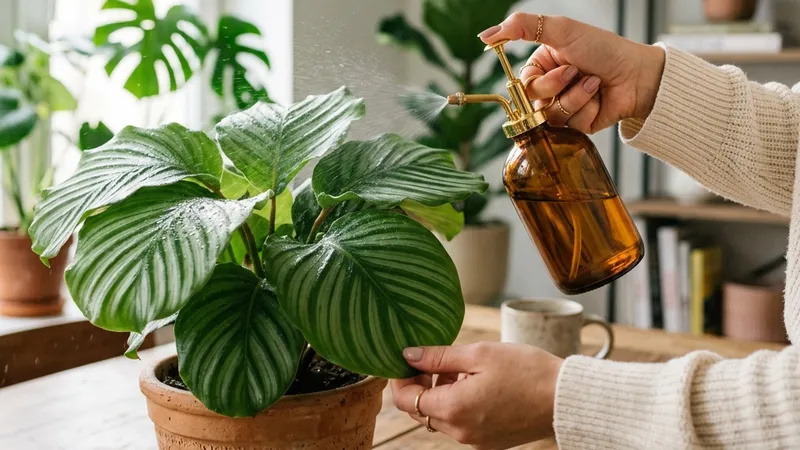
The Fix: You must raise the local humidity above 50%, ideally aiming for 60-70%. Misting the plant occasionally is not enough and can actually encourage fungal diseases. Instead, group your humidity-loving plants together to create a microclimate. Place the Calathea on a pebble tray filled with water (ensuring the bottom of the pot never touches the water). For the best results, invest in a small, continuous-run room humidifier.
Step 3: Perfect the Soil Moisture
Calatheas are Goldilocks plants when it comes to watering. They despise sitting in swampy, waterlogged soil, but they will also punish you immediately if the soil dries out completely. A single day of bone-dry soil will result in immediate tip damage that will show up a few days later.
The Fix: You must keep the soil consistently, evenly moist. Check the pot every few days. When the top two centimeters of soil feel dry to the touch, water thoroughly until it drains out the bottom. Use a highly aerated potting mix (mixed with plenty of perlite) to ensure the soil holds moisture without suffocating the roots. If you are confused about how much nutrients the plant needs while keeping it moist, refer to our guide on fertilizer basics and NPK ratios.
Prevention: Defending Against Pests
Because Calatheas have large, thin leaves and require warm conditions, they are absolute magnets for pests, particularly spider mites. Spider mites thrive when the air gets too dry, which is exactly when your Calathea is already stressed.
These microscopic arachnids suck the sap out of the leaves, causing the foliage to look faded, stippled with tiny yellow dots, and eventually brown and crispy. If you notice fine webbing near the stems, you have an infestation. To save the plant, you must isolate it and follow a strict eradication protocol, which you can read about in our full guide on treating spider mites on houseplant leaves.
When to Seek More Help / Edge Cases
If your Calathea’s leaves are curling inward like a tight cigar during the day, the plant is trying to protect itself from excessive light or heat. The curling reduces the leaf’s surface area to prevent moisture loss. If you see this behavior, immediately move the plant further away from the window into a shadier spot. Calatheas need bright, but entirely indirect, filtered light to maintain their stunning patterns without fading or burning.
Quick Summary
- Avoid tap water: Minerals and fluoride burn the leaf tips. Use distilled or rainwater.
- Boost humidity: Keep the air moisture above 50% using a humidifier or pebble trays.
- Consistent watering: Keep the soil evenly moist; never let it dry out completely.
- Ensure drainage: Do not let the pot sit in standing water to avoid root rot.
- Watch the light: Provide bright, indirect light. Direct sun will scorch the leaves and cause them to curl.
- Check for mites: Dry air invites spider mites, which can destroy the thin foliage quickly.
- Prune the brown: Use sterilized scissors to trim away crispy brown edges for a cleaner look.
Frequently Asked Questions
Can I cut the brown edges off my Calathea?
Yes. The brown, crispy tissue is dead and will not turn green again. You can use sharp, sterilized scissors to carefully trim along the natural curve of the leaf, removing the brown edge while leaving a tiny sliver of brown to avoid cutting into the healthy green tissue, which could cause further stress.
Why do my Calathea’s leaves point straight up at night?
This is completely normal! Calatheas are known as “Prayer Plants” because they exhibit a behavior called nyctinasty. Their leaves fold up at night, resembling hands in prayer, and lay flat during the day to catch the light. This movement is a sign of a healthy, active plant.
Will misting my Calathea prevent the brown tips?
No, misting only raises the humidity directly around the leaf for a few minutes. Once it evaporates, the air is dry again. Also, water sitting on the leaves for too long can encourage fungal spotting. A humidifier is a much more effective, long-term solution.
How often should I fertilize my Calathea?
Calatheas are sensitive to heavy mineral salts, including those found in fertilizers. You should only fertilize them during the active growing season (spring and summer) using a high-quality liquid houseplant fertilizer diluted to quarter-strength or half-strength, applied once a month.
Why is the beautiful pattern on my Calathea fading?
Fading patterns are almost always caused by too much direct sunlight. The intense light bleaches the delicate pigments in the leaf. Move the plant further back into the room to an area with softer, indirect light, and the new leaves should emerge with their bold patterns intact.
Keep Your Plants Safe with Kök!
Unsure about your plant’s humidity levels or watering schedule? Download the Kök app. Our AI diagnostics and smart watering tracker will monitor your plant’s environment and tell you exactly how to keep your Calathea happy. Download Kök App Now and keep your plants thriving!