Fertilizer Basics: Understanding N-P-K Ratios for Leafy Houseplants
Published Date:
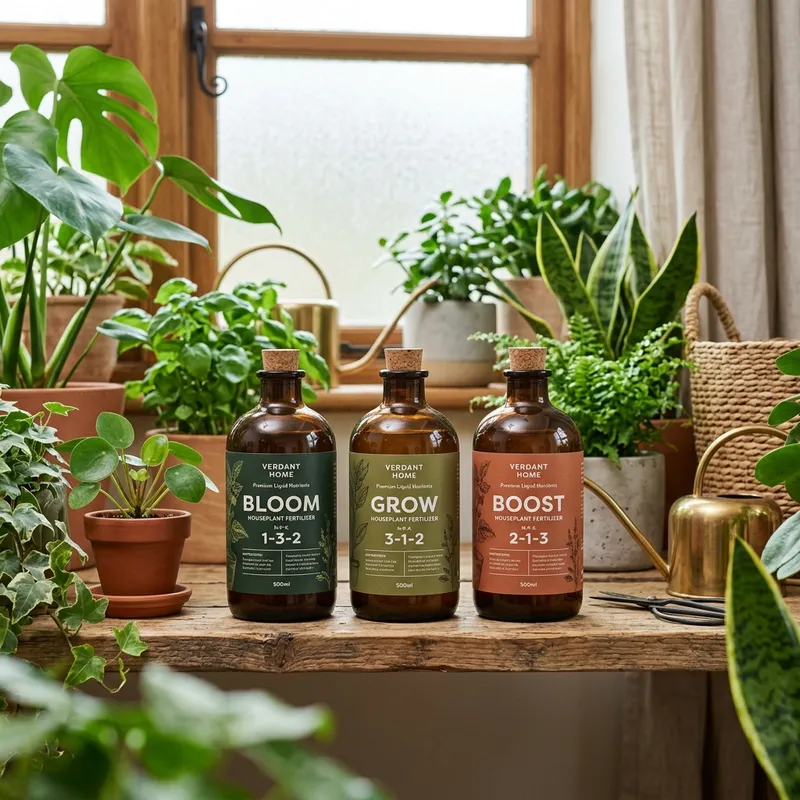
Feeding your houseplants can often feel more like a chemistry class than a relaxing hobby. When you walk into a garden center and stare at the wall of liquid plant foods, granules, and spikes, the choices are overwhelming. Every bottle prominently displays three numbers separated by dashes, like 10-15-10, 20-20-20, or 3-1-2. What do these numbers actually mean, and how do you know which one your specific plant needs?
These three numbers represent the N-P-K ratio, the foundational metric of all plant fertilizers worldwide. They indicate the exact percentage of Nitrogen, Phosphorus, and Potassium contained within the bottle. While plants require a variety of trace minerals to survive, these three macronutrients are the absolute non-negotiables for healthy growth. Understanding what each nutrient does inside the plant’s cellular structure is essential for maintaining lush, green foliage, encouraging vibrant blooms, and building a root system strong enough to resist diseases.
The Core Problem: Why Houseplants Starve
In a natural outdoor environment, the soil is an active, living ecosystem. Falling leaves, decaying organic matter, insects, and animal activity constantly break down into fresh nutrients, continually replenishing the soil’s reserves.
Your potted indoor plants do not have this luxury. They are trapped in a small, sterile plastic pot. Every time you water your plant and the excess water runs out of the drainage holes, a small amount of the soil’s natural nutrients washes away with it. Over a year or two, the potting soil becomes completely depleted. If you do not actively replace these macronutrients through fertilization, your plant will literally starve. The leaves will shrink, growth will stall, and the plant’s weakened immune system will make it highly susceptible to pests. If you are currently dealing with a pest outbreak, you should immediately refer to our guide on treating spider mites on houseplant leaves before you start feeding the plant.
Step-by-Step Solution: Decoding N-P-K
To choose the right fertilizer, you must understand the job of each specific macronutrient.
N - Nitrogen (The Foliage Builder)
Nitrogen is the first number in the ratio, and it is arguably the most important for typical indoor jungles. Nitrogen is a core component of chlorophyll, the green pigment that allows plants to absorb light and photosynthesize. When a plant absorbs nitrogen, it uses it directly to expand cellular walls and grow massive, lush, dark green leaves and thick stems.
If your plant’s older leaves are turning pale yellow overall (not just on the edges) and new leaves are coming in incredibly small, the plant is likely suffering from a nitrogen deficiency. High-nitrogen fertilizers (where the first number is the largest, like 3-1-2) are perfect for leafy green houseplants like Monsteras, Pothos, and Philodendrons.
P - Phosphorus (The Root and Bloom Booster)
Phosphorus, the middle number, focuses on the parts of the plant you often cannot see. It is responsible for transferring energy from one part of the plant to another. Crucially, phosphorus stimulates deep, aggressive root branching. A strong root system anchors the plant and allows it to absorb water more efficiently.
More visibly, phosphorus is the trigger for flowering and fruiting. If you are growing an African Violet, an Orchid, or a Peace Lily, and it refuses to push out any blooms despite getting good light, it may need a phosphorus boost. Fertilizers formulated for flowering plants (often labeled as “Bloom Boosters”) will have a high middle number, such as 10-30-20.
K - Potassium (The Immune System)
Potassium, the final number, acts as the plant’s overall health regulator. It manages the opening and closing of the stomata (the pores on the leaves), meaning it directly regulates how the plant breathes and loses water. Strong potassium levels thicken the plant’s cell walls, making the plant highly resilient to drought, temperature drops, and pest attacks. While you rarely need a fertilizer where potassium is the highest number, it must be present to keep the plant’s internal systems running smoothly.
Step-by-Step Solution: How to Apply Fertilizer Safely
Buying the right fertilizer is only half the battle. Applying it incorrectly can actually burn the plant’s roots and kill it overnight.
Step 1: Dilute the Solution
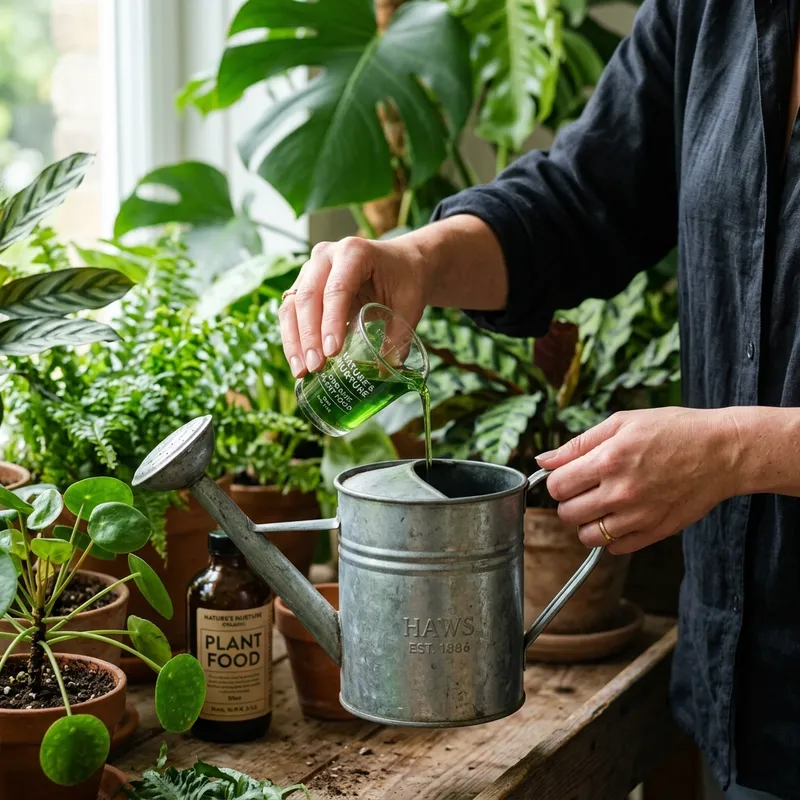
Indoor plants are sensitive. The instructions on fertilizer bottles are often written for fast-growing outdoor plants. For indoor houseplants, always dilute the liquid fertilizer to half-strength. If the bottle says to use 1 teaspoon per liter of water, use only 1/2 teaspoon. It is always better to under-feed than to over-feed.
Step 2: Never Fertilize Dry Soil
This is a critical rule. If your plant’s soil is bone dry, pouring a highly concentrated salt solution (which is what liquid fertilizer is) directly onto the thirsty roots will instantly burn them, causing the leaves to scorch and drop. Always water your plant with plain water first. Wait a few hours for the roots to plump up and absorb the moisture, and then pour in your diluted fertilizer mixture.
Step 3: Flush the Soil Monthly
Fertilizers leave behind mineral salts in the soil. Over time, these salts build up and create a toxic crust on the surface or around the roots. Once a month during the growing season, take your plant to the sink or shower and run plain, room-temperature water through the pot for 3 to 4 minutes. This flushes out the accumulated salts and resets the soil chemistry. If you grow sensitive plants, you might want to read our specific Calathea care guide to understand how hard water and salts cause leaf tip burn.
Prevention: When NOT to Fertilize
More fertilizer does not equal more growth. You must know when to hold back.
Stop Feeding in Winter
In the Northern Hemisphere, daylight drops drastically in winter. Without intense sunlight, your plants enter dormancy and stop growing. Because they are not growing, they cannot use extra nutrients. If you add fertilizer in December, the minerals will just sit in the soil, burn the roots, and slowly poison the plant. Stop fertilizing in late October and resume in late March when you see new leaves pushing out.
Don’t Fertilize Sick Plants
Fertilizer is food, not medicine. If your plant is suffering from root rot, severe pest damage, or extreme drought shock, adding fertilizer will only stress it out further. Wait until you have cured the underlying issue and the plant is actively growing again before introducing nutrients.
When to Seek More Help / Edge Cases
Some specialized plants absolutely hate standard houseplant fertilizers. Carnivorous plants, like Venus Flytraps and Pitcher Plants, have evolved to grow in nutrient-poor bogs and get all their nitrogen from eating insects. Applying any N-P-K fertilizer to their soil will kill them almost instantly. Similarly, air plants (Tillandsia) cannot absorb nutrients from soil because they do not have roots; they require a highly specialized bromeliad fertilizer misted directly onto their leaves. Always verify your specific plant’s genus before applying a generic feed.
Quick Summary
- N is for Nitrogen: Grows large, green leaves and strong stems.
- P is for Phosphorus: Encourages strong root systems and brilliant flowers.
- K is for Potassium: Boosts overall health and disease resistance.
- Foliage plants: Use a balanced ratio (10-10-10) or high nitrogen (3-1-2).
- Flowering plants: Use a high phosphorus ratio to encourage blooms.
- Dilute the dose: Always cut the recommended indoor dose in half to prevent root burn.
- Water first: Never apply fertilizer to bone-dry soil.
- Flush the salts: Run plain water through the pot monthly to wash away excess minerals.
- Winter break: Stop fertilizing completely during the dark winter months.
Frequently Asked Questions
Can I use coffee grounds as a nitrogen fertilizer?
While coffee grounds do contain nitrogen, they must be broken down by soil microbes and compost worms before a potted indoor plant can actually use the nutrients. Adding wet coffee grounds directly to indoor pots usually just creates a moldy layer on top of the soil and attracts fungus gnats.
Are organic fertilizers better than synthetic ones?
Synthetic fertilizers provide nutrients immediately in a highly bioavailable form, which is great for a quick boost. Organic fertilizers release nutrients slowly as they break down, which is gentler on the roots and prevents fertilizer burn. Both are effective, but organic options are generally safer for beginners.
What are the white crusty spots on the top of my plant’s soil?
This is mineral salt buildup from your fertilizer and tap water. It indicates that the salts are not being flushed out properly. Scrape the top layer of crusty soil off, replace it with fresh potting mix, and thoroughly flush the pot with distilled water.
Can I spray liquid fertilizer directly on the leaves?
This is called foliar feeding. While some plants can absorb micronutrients through their leaves, it is generally not recommended for indoor plants because it leaves a sticky residue that attracts dust and pests. It is much more efficient to feed the root system.
How do I know if I over-fertilized my plant?
Signs of fertilizer burn include leaves suddenly turning yellow and dropping, the edges of the leaves turning crispy and brown overnight, and a complete stalling of new growth. If you suspect fertilizer burn, flush the soil heavily with plain water immediately.
Keep Your Plants Safe with Kök!
Not sure how to schedule your plant care or how much water your plant needs? Download the Kök app. Our advanced AI diagnostics and smart scheduling tool will tell you exactly when to water, fertilize, and repot based on your local climate and plant species. Download Kök App Now and keep your plants thriving!