How to Identify and Get Rid of Spider Mites on Houseplants
Published Date:
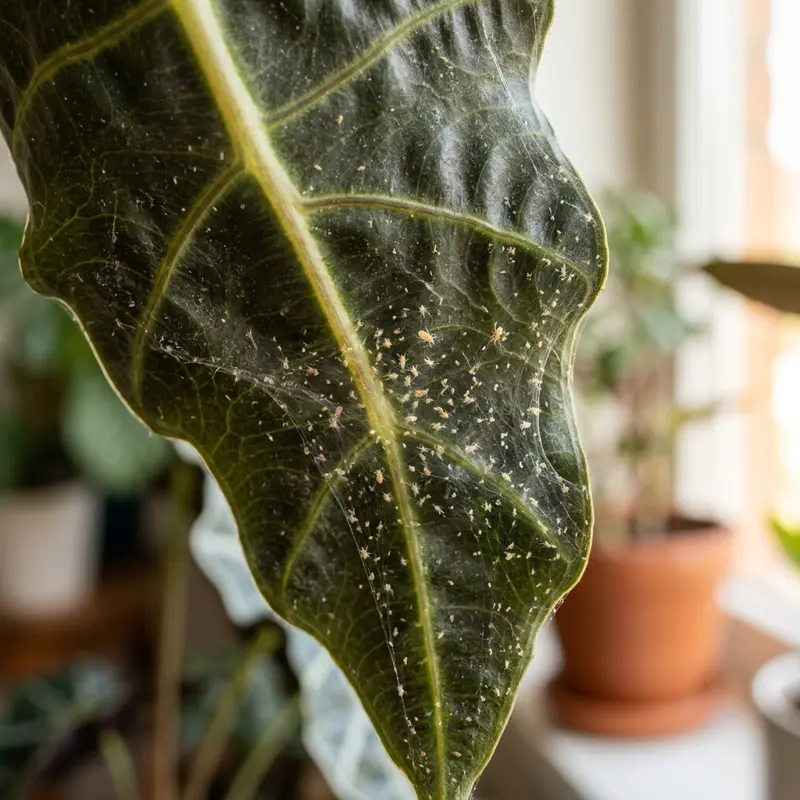
If you notice tiny yellow stippling or fine, dusty webs on the leaves of your favorite houseplants, you are likely dealing with spider mites. These microscopic pests are one of the most common and destructive challenges for indoor gardeners. They drain plant cells, quickly weakening and potentially killing your green companions if left unchecked.
Discovering a pest infestation can feel incredibly discouraging, especially if you have spent months carefully tending to your indoor jungle. However, a spider mite outbreak is not a death sentence for your plants. Understanding how these pests operate, what conditions they favor, and how to effectively interrupt their life cycle is the key to eradicating them permanently. Our AI botanical care assistant Kök has compiled this step-by-step treatment guide to help you take back control.
The Core Problem: Why Spider Mites Are So Destructive
Spider mites are not actually insects; they are tiny arachnids closely related to spiders and ticks. Because they are typically less than 1 millimeter in size, an infestation usually goes unnoticed until the population has exploded.
How They Feed
Spider mites survive by using specialized mouthparts to pierce individual plant cells and suck out the nutrient-rich sap inside. When a single cell is drained, it collapses and dies, leaving behind a microscopic yellow or white dot on the leaf surface. When hundreds or thousands of mites are feeding simultaneously, these tiny dots merge together, causing the entire leaf to take on a sickly, chlorotic, or bronze appearance. As the plant loses its ability to photosynthesize, the leaves dry up and drop off.
The Rapid Reproduction Cycle
The true danger of spider mites lies in their reproductive speed. In ideal conditions: which for spider mites means warm, dry air, a female can lay hundreds of eggs in her short lifetime. These eggs hatch in just a few days, and the nymphs mature into reproducing adults in less than a week. This means that within a single month, one pregnant female can spawn a colony of thousands. If you are dealing with moisture-loving plants like Marantas or Calatheas, which are particularly susceptible when the air is too dry, you might want to review our Calathea care guide to fix the environmental issues drawing pests in.
Step-by-Step Solution: Identifying and Eradicating Spider Mites
Because spider mites reproduce so quickly, a single treatment is rarely enough. Eradication requires a consistent, multi-week approach to kill the adults, the nymphs, and the newly hatching eggs.
Step 1: Confirm the Infestation and Quarantine
First, you must confirm you are dealing with spider mites. Look for their signature damage:
- Fine Webbing: Very thin, silk-like webs appearing on the undersides of leaves or where the leaf stem meets the main stalk. This webbing is often the first visible sign of a heavy infestation.
- Leaf Stippling: Small yellow or bronze dots scattered across the leaf surface.
- The Paper Test: Hold a sheet of white paper under a leaf and gently tap the leaf. If tiny specks that look like moving dust fall onto the paper, you have mites.
Once confirmed, immediately isolate the affected plant. Move it to a separate room far away from your other houseplants. Spider mites can easily travel on air currents or on your clothing from one plant to another.
Step 2: The Physical Wash
Before applying any treatments, mechanically remove as many pests as possible. Take the quarantined plant to the sink or shower. Using a handheld showerhead or a spray nozzle, aggressively spray the foliage with lukewarm water. The physical force of the water will wash away the webs, the adults, and many of the eggs. Pay special attention to the undersides of the leaves and the crevices where the stems join the main stalk, as these are their favorite hiding spots.

Step 3: Apply Organic Neem Oil
After the plant has dried from its shower, you need a treatment that disrupts their life cycle. Neem oil is an excellent organic option. The active compound in neem oil, Azadirachtin, acts as an insect growth regulator, preventing nymphs from molting and adult females from laying viable eggs.
Mix 1 liter of warm water with 1 teaspoon of high-quality, cold-pressed organic neem oil and a few drops of mild, unscented liquid dish soap (the soap acts as an emulsifier to mix the oil and water). Spray the entire plant thoroughly until it is dripping. You must cover the undersides of every single leaf.
Because neem oil only kills active mites and not the eggs, you must repeat this spraying process every 5 to 7 days for at least 3 to 4 consecutive weeks to break the life cycle completely.
Step 4: Boost Humidity
Spider mites thrive in arid, warm conditions. Increasing the ambient humidity around the plant makes the environment hostile to their reproduction and slows down the colony’s growth. Use a humidifier in the quarantine room to keep the humidity above 60%.
Prevention: What to Do Going Forward
Once you have defeated the infestation, you must change the environmental conditions that invited the pests in the first place.
Consistent Dusting and Cleaning
Spider mites love dusty leaves. Make it a habit to wipe down the leaves of your large houseplants with a damp microfiber cloth once a month. This not only removes dust to improve photosynthesis but also wipes away any stray mites before they can establish a colony.
Maintain Proper Humidity and Health
Keeping your plants healthy and stress-free is your best defense against pests. Ensure they are receiving the correct light and water for their species. A well-fed, healthy plant is much less likely to succumb to a minor pest attack. If you need help getting your plant’s nutrition back on track after the infestation, check out our guide on fertilizer basics and NPK ratios.
When to Seek More Help / Edge Cases
If you have been treating a plant with neem oil or insecticidal soap for a month and the mite population is still growing, you may be dealing with a pesticide-resistant colony. In this scenario, you may need to escalate to a synthetic systemic miticide or use biological controls. Predatory mites (like Phytoseiulus persimilis) can be purchased online and released onto your indoor plants. These beneficial predators specifically hunt and eat spider mites and will naturally die off once their food source is gone.
Quick Summary
- Identify the signs: Look for tiny yellow stippling on leaves, fine dusty webs, and premature leaf drop.
- Isolate immediately: Move the infected plant to a separate room to protect your collection.
- Wash them off: Use the shower to forcefully spray water on the leaves and dislodge the mites.
- Treat with Neem Oil: Spray with a neem oil and soap mixture, completely covering the undersides of the leaves.
- Repeat weekly: Apply the treatment every 5 to 7 days for a month to kill hatching eggs.
- Increase humidity: Run a humidifier to create an environment spider mites hate.
- Keep leaves clean: Wipe dust off your plants regularly to prevent future outbreaks.
Frequently Asked Questions
Can spider mites infest human hair or bite pets?
No, spider mites are strictly plant pests. They feed exclusively on plant tissue and sap. They cannot bite humans or animals, and they cannot infest your hair, skin, or furniture.
Why did the neem oil burn my plant’s leaves?
Neem oil can cause phytotoxicity (leaf burn) if it is applied when the plant is sitting in direct, intense sunlight, or if the mixture was mixed too strong. Always apply neem oil in the evening or in a shaded area, and keep the plant out of direct sun until the leaves have completely dried.
Should I cut off the leaves damaged by spider mites?
Yes, any leaves that are heavily stippled, completely yellow, or mostly brown will not recover. Snipping them off cleanly with sterilized scissors removes the heavily infested areas and helps the plant redirect its energy into pushing out healthy new growth.
Can I just use dish soap and water instead of neem oil?
A mild soap and water solution can kill the adult mites it comes into direct contact with by suffocating them, but it does not have the residual growth-regulating properties of neem oil. It is better than nothing, but less effective for completely breaking the reproductive cycle.
Where do indoor spider mites even come from?
Spider mites often enter the home on newly purchased plants, open windows, fresh-cut flower bouquets, or even hitchhiking on your clothing or pets after you have been working in an outdoor garden.
Diagnose and Heal Your Plants Instantly with Kök!
Unsure if your plant is suffering from spider mites, thrips, or just under-watering? Download the Kök app. Snap a picture of the damaged leaves, and Kök’s AI diagnostic model will immediately identify the pest or disease and deliver a customized care recipe. Download Kök App Now and protect your indoor jungle!