Fiddle Leaf Fig Care: Why Leaves Drop and How to Grow Bigger Leaves
Published Date:
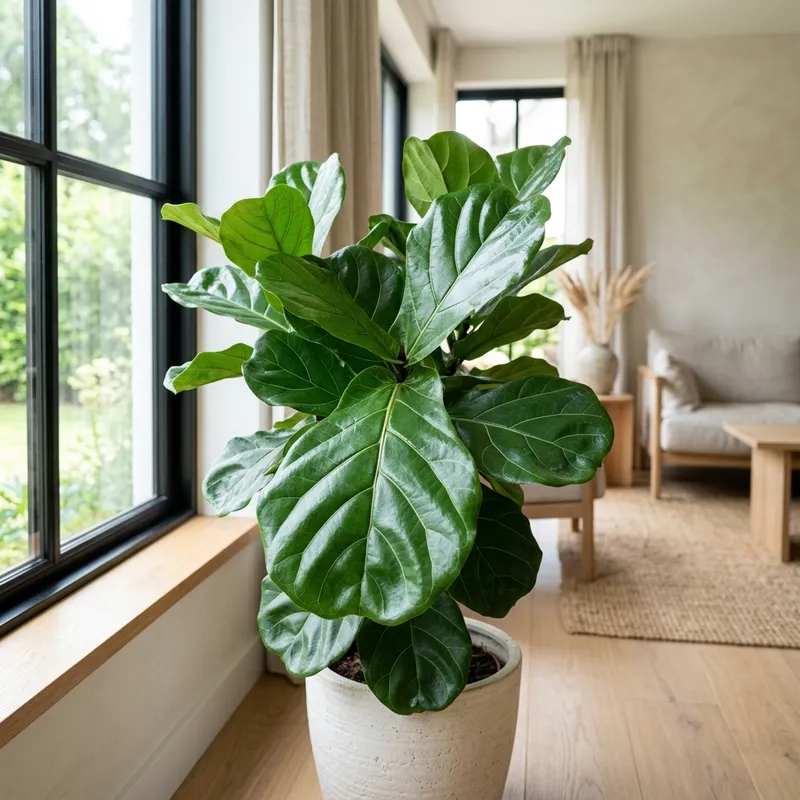
Fiddle Leaf Figs (Ficus lyrata) are the undisputed darlings of modern interior design, known for their dramatic, violin-shaped foliage that can instantly transform a boring living room into a lush tropical oasis. However, they are also notorious for being incredibly finicky. A minor change in watering, a slight shift in lighting, or even just moving the pot across the room can trigger a sudden, catastrophic drop of leaves, leaving plant parents deeply frustrated.
If your beautiful indoor tree is suddenly looking bare and sickly, do not panic. These plants are dramatic, but they are also highly communicative. Understanding the root cause of leaf dropping is the first step to reviving your Fiddle Leaf Fig. In this guide, we will explore exactly why your plant is unhappy, how to stop the leaf drop, and the specific care secrets you need to know to encourage massive, vibrant new leaves.
The Core Problem: Why Fiddle Leaf Figs Drop Leaves
Unlike many flexible houseplants, the Fiddle Leaf Fig thrives on absolute consistency. In their natural habitat in the lowland rainforests of West Africa, they experience incredibly stable temperatures, high humidity, and consistent rainfall year-round. When you place them in a modern home, they are forced to deal with dry central heating, air conditioning drafts, and wildly fluctuating light levels.
The Shock Response
The Fiddle Leaf Fig responds to sudden environmental changes through a mechanism called abscission, the intentional shedding of leaves. When the plant is stressed, it enters survival mode. To conserve energy and water, it cuts off the nutrient flow to its oldest, lowest leaves, causing them to turn yellow or brown and fall off. This is why leaf drop usually starts at the bottom of the trunk and moves upward.
Identifying the Specific Stressor
To stop the drop, you must play detective.
- Crispy, totally brown leaves that fall off: Usually indicates severe underwatering or extreme dry heat from a radiator.
- Yellowing leaves that drop while the soil is wet: Almost certainly root rot caused by overwatering or poor drainage.
- Leaves dropping with no color change: Often points to severe light starvation or sudden temperature shock from an AC vent.
Step-by-Step Solution: Stabilizing Your Ficus
If your tree is actively losing leaves, you must immediately stabilize its environment. Follow these steps to halt the decline.
Step 1: Lock in the Light
Light starvation is the silent killer of Fiddle Leaf Figs. These plants need massive amounts of bright, filtered light to sustain their large leaves. Move your plant to the brightest spot in your home, ideally directly in front of an east-facing window or just a few feet pulled back from a south or west-facing window. If you must use artificial light, ensure you are using a powerful full-spectrum LED. Once you find the perfect bright spot, do not move the plant. Even turning the pot too often can cause them to drop leaves in protest.
Step 2: Perfect the Watering Routine
Overwatering kills more Ficus trees than anything else. You must water deeply, but infrequently. Wait until the top 5 to 7 centimeters of soil are completely dry to the touch. When you water, pour slowly until water pours out of the bottom drainage holes, ensuring the entire root ball is saturated.
Crucial rule: Never let the pot sit in a saucer full of runoff water for more than 15 minutes. Empty the tray. If the roots sit in water, they will suffocate and rot within days. If you’ve been overwatering other plants, you can read about rescuing them in our guide on propagating pothos plants in water to save pieces of a dying plant.
Step 3: Eliminate Drafts
Survey the area around your plant. Is it sitting under an air conditioning vent? Is it next to a radiator? Is it by a door that frequently opens to freezing winter air? Relocate the plant immediately if it is exposed to any drafts. Ficus trees need a stable temperature between 18°C and 26°C.
Prevention: How to Grow Bigger, Healthier Leaves
Once your plant has stabilized and stopped dropping leaves, your goal shifts to encouraging those massive, glossy, Instagram-worthy leaves.
Keep the Leaves Meticulously Clean
Fiddle Leaf Fig leaves are massive dust magnets. When dust coats the leaf surface, it blocks the stomata (pores) and acts like a filter, significantly reducing the amount of light the plant can absorb for photosynthesis. Every two weeks, gently wipe down the top and bottom of every leaf with a damp, soft microfiber cloth. Support the back of the leaf with your hand so you don’t snap it off while wiping.
Shake the Trunk (The Wind Trick)
In nature, Ficus trees are constantly buffeted by wind, which creates micro-tears in the trunk. As these tears heal, the trunk grows thicker and stronger, capable of supporting huge, heavy leaves. Indoors, there is no wind, leading to weak, spindly trunks that lean over. Replicate the wind by gently grabbing the main trunk and giving it a firm shake for about 2 minutes every time you water it.
Feed with Nitrogen
During the active growing season (spring and summer), your plant needs fuel to expand its foliage. Feed the plant monthly with a high-quality liquid fertilizer that has a high nitrogen ratio (the first number in the N-P-K sequence). Nitrogen is the key macronutrient responsible for cellular leaf expansion.
When to Seek More Help / Edge Cases
Sometimes, your Fiddle Leaf Fig will develop small, reddish-brown spots scattered across the brand new, emerging leaves. This is called edema. It happens when the roots absorb water much faster than the leaves can transpire it, causing the leaf cells to burst. While it looks terrifying, edema is usually harmless and will fade as the leaf grows larger and matures. To prevent it, ensure your watering schedule is highly consistent so the plant isn’t swinging between severe drought and sudden flooding. If you are experimenting with water-based growing systems, you should note that Ficus trees generally do not adapt well to indoor hydroponics and prefer well-draining soil.
Quick Summary
- Stop moving it: Find a bright spot and leave the plant there permanently to avoid shock.
- Bright indirect light: Give it the sunniest spot in your house without direct midday sun.
- Check soil deeply: Only water when the top 5-7 cm of soil are completely dry.
- Drainage is non-negotiable: Never let the plant sit in a saucer of water.
- Avoid drafts: Keep away from heaters, AC units, and drafty doors.
- Wipe the leaves: Dust blocks sunlight; clean leaves every two weeks.
- Shake the tree: Simulate wind by shaking the trunk gently to strengthen it.
- Fertilize in spring: Use a high-nitrogen feed to grow larger foliage.
Frequently Asked Questions
Can a Fiddle Leaf Fig grow back leaves on the bottom of its trunk?
No. Once a Ficus drops a leaf from the lower part of its trunk, that specific node seals over and will never grow a leaf again. The plant will only produce new growth from the top apical buds. If your tree is very bare at the bottom, you can look into “notching” to encourage branching.
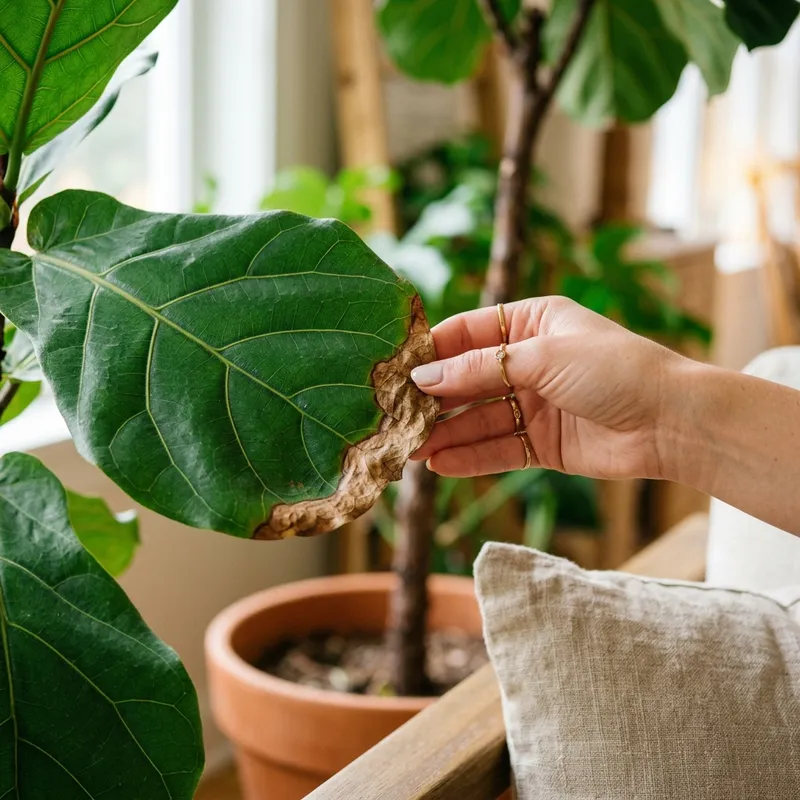
Why do the edges of my Fiddle Leaf Fig leaves look chewed and brown?
Crispy, brown, tearing edges are usually a sign of extremely low humidity combined with underwatering. The leaf margins dry out and become brittle, tearing as the leaf tries to expand. Group plants together or run a humidifier to raise ambient moisture.
How often should I repot my Fiddle Leaf Fig?
Fiddle Leaf Figs actually prefer to be slightly root-bound. You should only repot them every 2 to 3 years, and only go up one pot size (about 5 cm wider). Repotting too frequently causes immense root shock and guarantees leaf drop.
Can I put my Fiddle Leaf Fig outside in the summer?
Yes, but you must do it very gradually. Move it to a fully shaded outdoor patio first, then slowly introduce it to morning sun over a period of two weeks. If you abruptly move it from an indoor living room to direct outdoor sun, every leaf will sunburn and drop off.
What should I do with a leaf that is half brown and crispy?
If a leaf is more than 50% damaged, it is draining energy from the plant without providing much photosynthesis. You can use sterilized shears to cut off just the brown, dead section, or snip the entire leaf off near the trunk to improve the plant’s appearance.
Keep Your Plants Safe with Kök!
Not sure how to schedule your plant care or how much water your plant needs? Download the Kök app. Our advanced AI diagnostics and smart scheduling tool will tell you exactly when to water, fertilize, and repot based on your local climate and plant species. Download Kök App Now and keep your plants thriving!