How to Propagate Pothos Plants in Water: A Step-by-Step Guide
Published Date:
The Pothos (Epipremnum aureum), often called Devil’s Ivy, is beloved worldwide for its aggressive vining growth, air-purifying qualities, and exceptionally resilient nature. It is widely considered the ultimate beginner houseplant. But perhaps its best feature is how effortlessly it can be cloned. Once you have a single healthy Pothos plant, you can easily turn it into dozens of new plants to fill your home, create lush hanging baskets, or share with friends as heartfelt gifts.
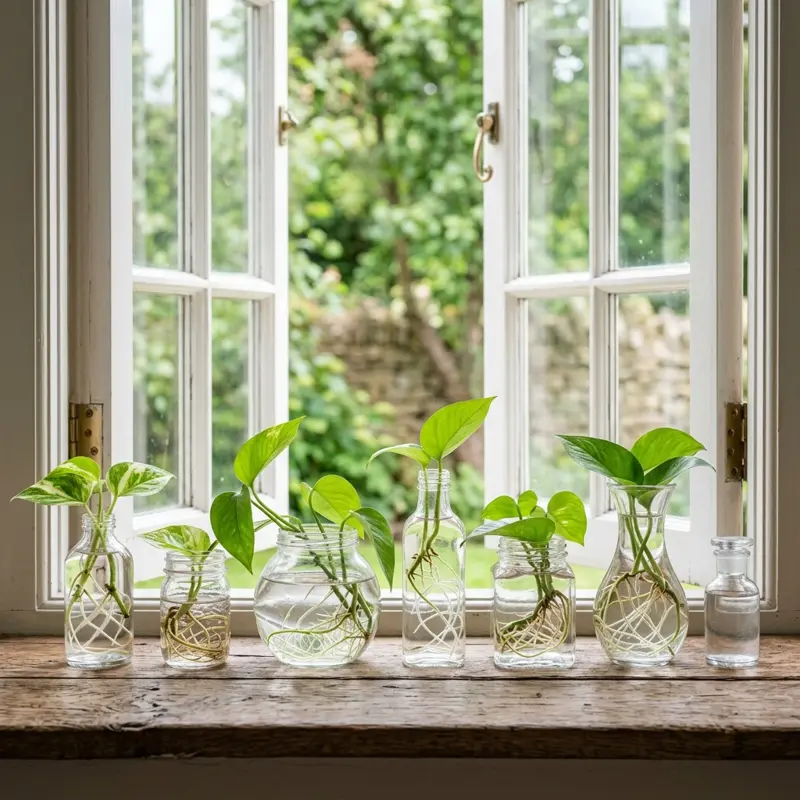
While you can propagate Pothos directly into soil, the easiest, fastest, and most visually rewarding method for beginners is water propagation. Watching the crisp white roots slowly unfurl through clear glass is one of the most satisfying experiences in indoor gardening. How do you take the perfect cutting and ensure it grows a strong root system? Our AI botanical guide Kök outlines the process step-by-step to guarantee propagation success.
The Core Problem: Why Cuttings Fail to Root
Many beginners excitedly chop long vines off their Pothos, stick them in a vase of water, and wait weeks, only to find the stem has turned into a slimy, rotting mess. The problem almost always comes down to a fundamental misunderstanding of plant anatomy.
A plant cannot spontaneously generate roots from just anywhere on its stem. Roots require specialized cellular structures to develop. If you simply snip a leaf off by its stem and put it in water, the leaf might survive for a few months, but it will never grow a root system or become a new plant. To successfully clone a Pothos, you must understand where the magic happens: the node.
Locating the Node (The Golden Rule)
The most common mistake beginners make is cutting the vine randomly between leaves. Pothos cuttings will only grow roots if they contain a node.
A node is the small, swollen, often brown bump on the main vine, located exactly where the leaf stem (petiole) joins the vine. In the wild, Pothos use these nodes to grow aerial roots that grip onto tree trunks as they climb toward the jungle canopy. These little brown bumps are essentially root initials; they contain all the necessary genetic material and cellular machinery capable of growing a completely new root system when exposed to moisture.
If your cutting does not include at least one node, it will rot. It is that simple.
Step-by-Step Solution: The Water Propagation Method
With the knowledge of nodes in hand, you are ready to start chopping. Follow these exact steps to ensure a nearly 100% success rate.
Step 1: Prepare Your Tools
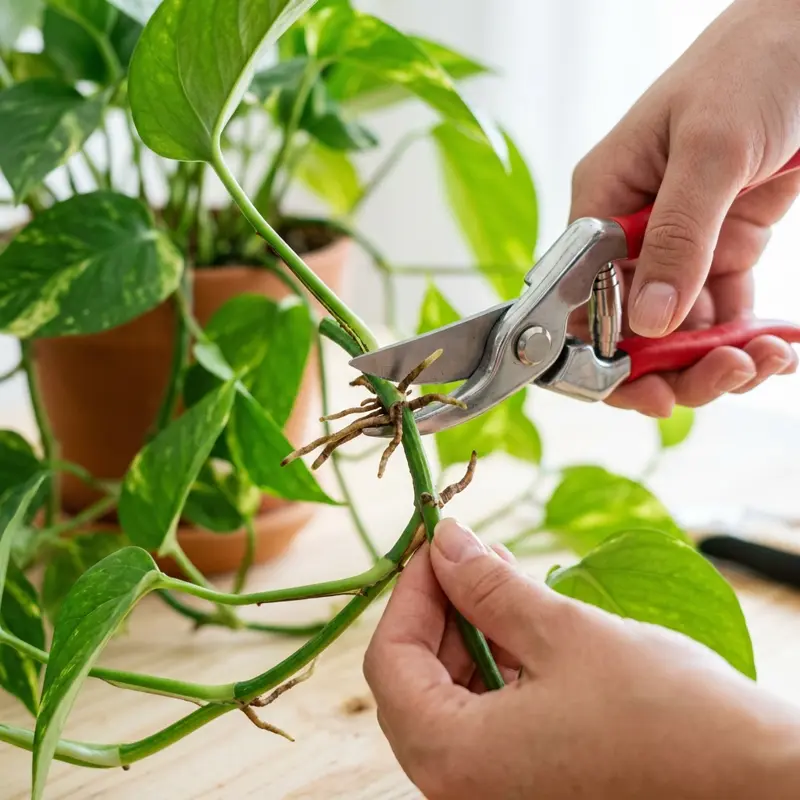
Before you cut anything, ensure your scissors or pruning shears are clean. Wipe the blades down with rubbing alcohol. A dirty blade can introduce fungal spores or bacteria directly into the fresh wound of the plant, causing it to rot before it ever has a chance to root.
Step 2: Make the Perfect Cut
Select a healthy, vibrant vine on your mother plant. Avoid old, yellowing vines or vines with tiny, stunted leaves.
Identify a node on the vine. Using your sterilized shears, make a clean cut at a 45-degree angle about 1 to 2 centimeters below the node. Your cutting should be about 10-15 centimeters long. It should have at least one node at the bottom and 2-3 healthy leaves at the top to provide energy for the new roots.
Step 3: The Water Rooting Phase
Once your cuttings are ready, it is time to submerge them:
- Place in Water: Submerge the bottom of the stem in a clean glass jar filled with room-temperature tap water. Ensure that the node is completely underwater.
- Remove Lower Leaves: If any leaves fall below the waterline, snip them off. Leaves submerged in water will quickly rot and foul the water, killing the cutting.
- Provide Bright Light: Move the jar to a warm spot with plenty of bright, indirect sunlight. Avoid placing it in direct, hot sun, which will boil the water and scorch the unrooted cutting.
- Change the Water Weekly: Stagnant water loses its oxygen, causing rot. Replace the water completely once a week to keep it fresh and oxygenated.
Within 10 to 14 days, you will notice the brown bumps swelling and tiny white roots emerging from the nodes.
Step 4: Potting Your Cuttings in Soil
You must wait until the water roots are at least 5 to 10 centimeters long before potting them in soil. If the roots have started growing secondary roots (roots growing off the main roots), they are definitely ready.
Plant them in a small container (no larger than 10cm wide to start) with a well-draining potting soil. Keep the soil slightly more damp than usual for the first two weeks. The roots grew in pure water, and they need a brief transition period to adjust to the drier soil environment. Once you master this process, you can even explore growing plants entirely in water, which you can read about in our guide to indoor hydroponics plants.
Prevention: Avoiding Common Propagation Mistakes
While Pothos are hardy, propagation is still a delicate process. Keep these tips in mind to avoid failure.
Avoid Overcrowding the Jar
Do not jam 20 cuttings into one small glass jar. When cuttings are packed too tightly, air circulation drops, and if one cutting begins to rot, the bacteria will rapidly spread to the others. Keep your cuttings loosely arranged so the stems do not crush each other.
Don’t Wait Too Long to Pot
If you leave your cuttings in water for six months, the roots will adapt so perfectly to an aquatic environment that they will suffer extreme shock and likely die when finally moved to soil. If you plan to move them to soil, do so as soon as the roots are strong enough (about a month). If you decide to tackle more temperamental plants next, we highly recommend reading our Fiddle Leaf Fig care guide before taking shears to them.
When to Seek More Help / Edge Cases
Sometimes, despite following all the rules, a cutting just refuses to root and sits dormant in the water for weeks. If your home is very cold (below 18°C), the rooting process will slow to a crawl. You can speed it up by placing the propagation jar on a seedling heat mat to gently warm the water, which stimulates root growth. Additionally, if the cutting starts to look wrinkly and sad but hasn’t rotted, you can place a clear plastic bag over the jar to create a miniature greenhouse, trapping humidity around the leaves so it doesn’t dry out while waiting for roots.
Quick Summary
- Find the node: Roots only grow from the small brown bumps (nodes) on the stem.
- Sterilize tools: Always use clean scissors wiped with alcohol.
- Cut below the node: Snip 1-2 cm below the node at an angle.
- Remove underwater leaves: Leaves submerged in the jar will rot and ruin the water.
- Change water weekly: Keep the water fresh and oxygenated.
- Wait for 5-10cm roots: Do not pot in soil until the roots are well established.
- Keep soil moist initially: Help water roots transition by keeping new soil slightly damp for two weeks.
Frequently Asked Questions
Can I propagate a Pothos from just a single leaf?
No, a Pothos leaf cut without a node attached will not grow into a new plant. It may survive in water for months and look perfectly fine, but it lacks the cellular structures required to produce roots or a new vine.
Should I use rooting hormone powder in the water?
It is entirely unnecessary for Pothos. Pothos naturally produce high levels of their own rooting hormones. In fact, adding powder to water often just creates a sludgy mess that encourages bacterial growth.
My cuttings are turning black and mushy. What happened?
This is rot, usually caused by dirty scissors, a cutting that didn’t have a node, or forgetting to change the water. Once the stem is black and mushy, it is dead. Cut off the rotted part (if there is still healthy stem above it) and start over in a clean jar.
How many cuttings should I put in one pot?
To create a lush, bushy plant, you should plant 5 to 8 rooted cuttings together in a single 10cm or 12cm pot. A single cutting will only ever grow into a single, long vine and will never branch out to look like a full basket.
Can Pothos live in water forever?
Yes! They can live indefinitely in a vase of water. However, because tap water lacks essential nutrients, growth will eventually stall. You must add a few drops of liquid hydroponic fertilizer to the water every month to keep the plant nourished long-term.
Grow Your Plant Family with Kök!
Struggling to keep your cuttings alive or unsure when they are ready to be planted in soil? Download the Kök app. Kök’s propagation assistant helps you set water change reminders, log growth photos, and diagnose root rot early. Download Kök App Now and propagate like a pro!